You wake up with a dull headache. Your jaw feels tight, maybe even sore. Your teeth seem more sensitive than usual. You chalk it up to a poor night’s sleep and move on with your day. But what if these symptoms signal something more serious—a condition that could be silently damaging your teeth, jaw, and overall quality of life?
Teeth grinding, clinically known as bruxism, affects an estimated 10-15% of adults, though many experts believe the actual number is much higher since most grinding occurs during sleep. At Radiant Smiles in Arlington, Dr. Surbhi Chandna regularly helps patients identify and treat bruxism before it causes irreversible damage to their smiles.
Why Spring Is Prime Time for Teeth Grinding
While bruxism can occur year-round, certain times of year see spikes in stress-related grinding. Spring brings tax deadlines, end-of-quarter work pressures, and for families, the chaos of finishing the school year. This accumulated stress doesn’t disappear when you fall asleep—instead, it often manifests as clenching and grinding that can exert forces of up to 250 pounds on your teeth.
Studies show that stress and anxiety are among the strongest predictors of bruxism. When your mind races with worries about finances, work, or family responsibilities, your body responds by tensing muscles—including those powerful muscles that control your jaw.
The Surprising Signs You Might Be a Grinder
Many people grind their teeth for years without realizing it. Since bruxism typically occurs during sleep, you may have no memory of doing it. However, the evidence often shows up in other ways:
- Morning Headaches: Tension headaches upon waking, particularly around the temples, frequently result from nighttime clenching and grinding.
- Jaw Pain or Stiffness: Discomfort in the jaw muscles, especially when first opening your mouth in the morning, suggests overworked muscles from nocturnal grinding.
- Tooth Sensitivity: Grinding wears down enamel, exposing the sensitive dentin layer beneath. If hot, cold, or sweet foods suddenly bother you, enamel erosion may be the cause.
- Worn, Flattened, or Chipped Teeth: Over time, the grinding action literally wears teeth down, creating flat surfaces on molars or causing chips and fractures.
- Ear Pain: Because of the jaw’s proximity to the ear canal, bruxism can cause earache-like symptoms without any actual ear infection.
- Disrupted Sleep: Grinding can be loud enough to wake a sleeping partner, and the muscle activity may fragment your own sleep without you realizing it.
- Tight or Tired Jaw Muscles: If your jaw feels fatigued, particularly in the morning, you’ve likely been working those muscles all night.
When Grinding Leads to TMJ Disorders
Left untreated, chronic bruxism often contributes to temporomandibular joint disorders (TMJ or TMD). The temporomandibular joints connect your jawbone to your skull and allow the complex movements needed for speaking, chewing, and yawning. When these joints become stressed, inflamed, or damaged, the results can be debilitating.
TMJ disorder symptoms include:
- Clicking or Popping Sounds: Audible noises when opening or closing your mouth indicate joint dysfunction.
- Limited Jaw Movement: Difficulty opening your mouth wide or feeling like your jaw “catches” or locks.
- Facial Pain: Discomfort that radiates through the face, particularly around the jaw joint area in front of the ears.
- Neck and Shoulder Pain: The interconnected muscles of the head, neck, and shoulders mean TMJ problems often cause pain well beyond the jaw itself.
- Changes in Bite: Your upper and lower teeth may no longer fit together the way they once did.
The Real Cost of Ignoring Bruxism
Many patients underestimate the damage teeth grinding can cause. Unlike a cavity, which develops in one spot, bruxism affects your entire bite. The consequences compound over time:
Enamel Destruction: Once enamel wears away, it doesn’t regenerate. Severe grinding can remove millimeters of tooth structure, eventually requiring crowns, veneers, or other restorations to rebuild what’s been lost.
Cracked and Fractured Teeth: The immense pressure of grinding can cause teeth to crack or fracture, sometimes requiring extraction if the damage extends below the gumline.
Gum Recession: The forces involved in bruxism can contribute to gum recession, exposing vulnerable root surfaces and increasing sensitivity and decay risk.
Expensive Dental Work: Patients who grind their teeth often face premature failure of fillings, crowns, and other dental work. The investment you’ve made in your smile becomes compromised.
Chronic Pain: Ongoing headaches, jaw pain, and facial discomfort significantly impact quality of life, affecting everything from work productivity to personal relationships.
How Dr. Chandna Approaches Bruxism Treatment
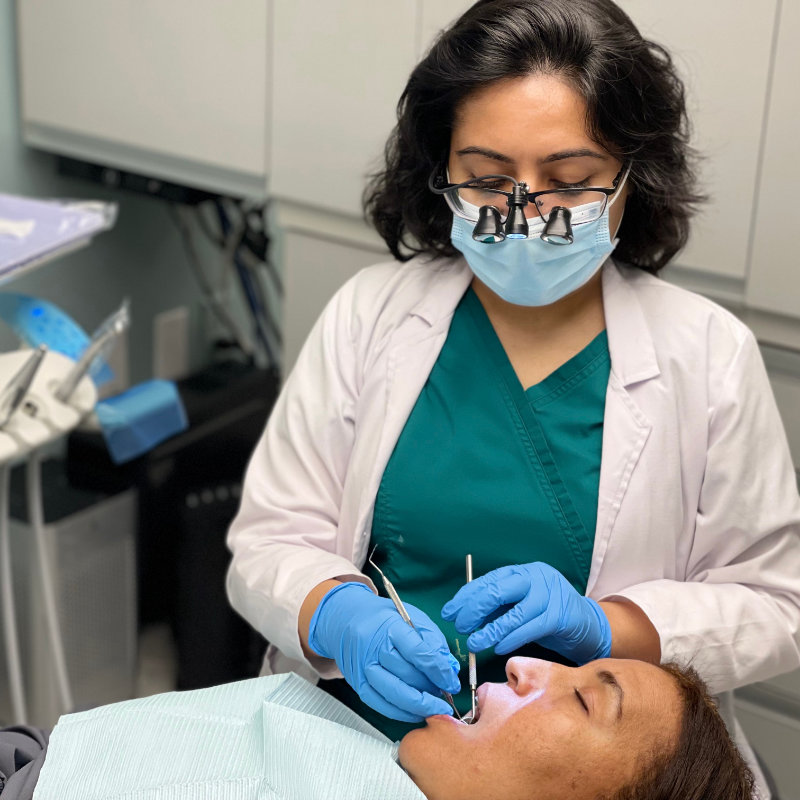
At Radiant Smiles, Dr. Chandna takes a thorough, individualized approach to diagnosing and treating teeth grinding. Her conservative philosophy means starting with the least invasive effective treatments and escalating only when necessary.
Comprehensive Evaluation: Dr. Chandna examines your teeth for wear patterns, checks your jaw joints for signs of dysfunction, and discusses your symptoms and lifestyle factors. Digital technology, including intraoral scanners, allows for precise documentation of tooth surfaces that can be compared over time.
Custom Nightguards: For most bruxism patients, a custom-fitted nightguard provides the first line of defense. Unlike over-the-counter options, professional nightguards are precisely fabricated from impressions of your teeth, ensuring optimal fit and comfort. The guard creates a protective barrier between upper and lower teeth and can be designed to reposition the jaw in a way that reduces muscle tension.
TMJ Therapy: When grinding has progressed to TMJ involvement, additional treatments may include jaw exercises, lifestyle modifications, stress management techniques, and in some cases, referral to specialists for advanced care.
Restorative Solutions: If grinding has already damaged teeth, Dr. Chandna offers restorative options including dental crowns, bonding, and veneers to rebuild tooth structure and protect against future wear.
Addressing Root Causes: Because stress plays such a significant role in bruxism, Dr. Chandna discusses stress management strategies and may recommend techniques like limiting caffeine and alcohol, especially in the evening.
Protecting Your Smile Starts with Awareness
The first step in addressing teeth grinding is recognizing it exists. If you experience any of the symptoms described above—morning headaches, jaw pain, tooth sensitivity, or unexplained wear on your teeth—don’t dismiss them as minor inconveniences.
Partners often notice grinding before the person doing it. If someone has mentioned hearing you grind your teeth at night, take that observation seriously. Early intervention can prevent years of progressive damage.
Athletes and active individuals should also be aware that daytime clenching during physical exertion is common. If you notice yourself clenching during workouts, sports, or even stressful work situations, you may benefit from protective solutions.
A Conservative Approach That Puts Patients First
Dr. Chandna’s philosophy at Radiant Smiles emphasizes partnering with patients to find solutions that make sense for their individual situations. As she explains, “We believe in a conservative approach to dentistry and partner with our patients to determine treatments that will achieve the desired level of oral health.”
This means you won’t be pushed toward unnecessary treatments. Instead, Dr. Chandna takes time to explain findings clearly—as one patient noted, she’s “extremely thorough” and “explains her findings more clearly than any dentist I have ever had.”
Schedule Your Evaluation at Radiant Smiles
If you suspect you might be grinding your teeth, or if you’re experiencing jaw pain, headaches, or other symptoms that could indicate bruxism or TMJ problems, schedule an evaluation at Radiant Smiles. Early diagnosis and treatment can save your teeth from irreversible damage and spare you from chronic pain.
Conveniently located in the Ballston/Virginia Square corridor just two blocks from Virginia Square Metro Station, Radiant Smiles welcomes patients from throughout Arlington and Northern Virginia, including Clarendon, Courthouse, and Ashton Heights.
Posted on behalf of
3801 N Fairfax Dr Suite 25
Arlington, VA 22203
Phone: (703) 528-0444
FAX: (703) 516-0262
Email: info@theradiantsmiles.com